
Laminate is worth it for most homeowners who want the look of wood without the price tag. It’s durable, scratch-resistant, and budget-friendly, but it doesn’t add the same resale value as solid hardwood and can’t be refinished once it wears out. Whether it’s the right call depends on the room, your budget, and how long you plan to stay in the home.
Here’s a straightforward breakdown of what you’re actually getting.
What Is This Material Made Of?
It’s a multi-layer synthetic product: a high-resolution photographic layer (usually printed to mimic wood grain) sits under a clear, durable wear coating, with a core board beneath for stability. It isn’t real wood, but modern versions are convincing enough that most people can’t tell the difference from a few feet away.
Pros: Why Homeowners Choose It
- Lower cost than hardwood: you get a wood-look surface at a fraction of the price.
- Scratch and dent resistance: the wear layer holds up well against pets, furniture, and foot traffic.
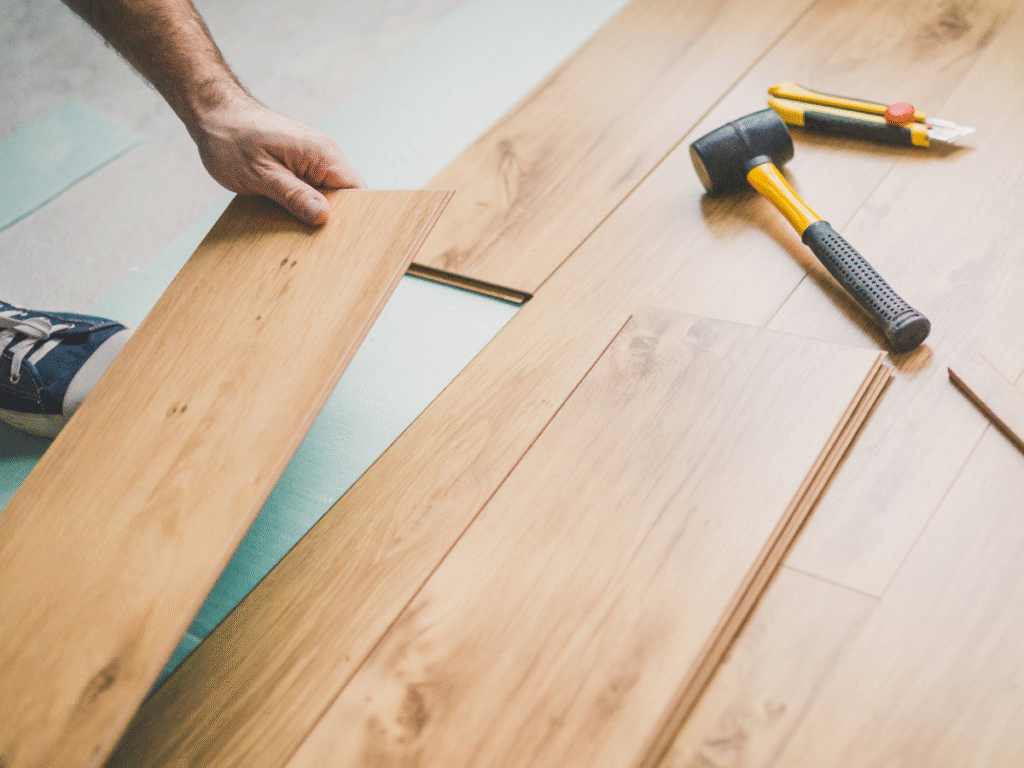
- Easy click-lock installation: planks snap together, which usually means a faster project timeline.
- Low maintenance: sweeping and occasional damp mopping is typically enough; no refinishing or waxing required.
- Wide style range: available in tones and textures that mimic oak, walnut, and other popular wood species.
- Stable in temperature swings are less: prone to expanding or contracting than solid wood in fluctuating conditions.
Cons: Where It Falls Short
- Can’t be refinished: once the top layer wears through or gets damaged, the plank has to be replaced, not sanded down.
- Less resale appeal: buyers and appraisers often value solid or engineered hardwood higher.
- Moisture sensitivity: this option isn’t fully waterproof by default, so pooled water or high humidity can cause swelling at the seams.
- Hollow sound underfoot: without proper underlayment, it can feel and sound less solid than hardwood flooring.
- Shorter realistic lifespan: a good product lasts 15-25 years with normal use, versus decades for solid hardwood that’s periodically refinished.
Laminate vs. Hardwood vs. Vinyl: How Do They Compare?
Factor | Laminate | Solid Hardwood | Luxury Vinyl (LVT) |
Upfront cost | Low | High | Low-to-moderate |
Water resistance | Limited | Poor | Excellent |
Can be refinished | No | Yes | No |
Scratch resistance | Very good | Moderate | Very good |
Resale value impact | Moderate | High | Moderate |
Best rooms | Bedrooms, living rooms, hallways | Living areas, dining rooms | Kitchens, bathrooms, basements |
What Does It Actually Cost?
Total project cost depends on plank quality, square footage, and how much subfloor prep is needed. As a general range for material plus labor:
Grade | Typical Cost Range (per sq. ft.) |
Budget | $2 – $4 |
Mid-range | $4 – $6 |
Premium (waterproof, wide-plank) | $6 – $9 |
Note: These are general estimated ranges, not exact pricing. Actual cost depends on your specific space, material choice, and project scope.
Subfloor repairs, old floor removal, and trim work are usually priced separately. An in-home estimate is the only reliable way to get an exact number for your space.
Where Does This Option Make the Most Sense?
- Rental properties: durable and inexpensive to replace if needed.
- High-traffic family rooms: holds up well against kids, pets, and daily wear.
- Budget remodels: delivers a wood-look upgrade without a hardwood-sized bill.
- Rooms with stable humidity: bedrooms and living rooms, rather than bathrooms or laundry rooms.
Final Thoughts
This material earns its popularity honestly: it’s durable, affordable, and easy to live with, even if it can’t be refinished or match hardwood’s resale pull. For anyone weighing Laminate Flooring Pasadena options against solid wood or vinyl, the right pick really comes down to the room, the budget, and how long you’re planning to stay put. Pasadena Hardwoods carries a range of styles alongside hardwood and vinyl, and walks through the trade-offs during a free in-home consultation so the choice is based on your actual space, not guesswork.
Final Thoughts
Frequently Asked Questions
Q1. Is this a good long-term investment?
It holds up well for 15-25 years with normal use, though it won’t add the same resale value as solid or engineered hardwood over time.
Q2. Can it get wet without ruining it?
Standard versions aren’t fully waterproof. Spills should be wiped promptly, and only water-resistant or waterproof planks should go in moisture-prone rooms.
Q3. How does the cost compare to real hardwood?
This option typically costs a fraction of solid hardwood per square foot, making it a practical choice for budget-conscious remodels.
Q4. Does it feel as sturdy as hardwood underfoot?
With quality underlayment, it feels solid and stable. Skipping underlayment can leave it sounding hollow when walked on.
Q5. Can it be installed over an existing floor?
In many cases, yes, as long as the existing surface is flat and stable. An inspection confirms whether your subfloor qualifies.